




The nationwide implementation of the German dual education model has emerged as a cornerstone of educational reform and labor market alignment in Kosovo. By bridging the traditional divide between theoretical classroom instruction and hands-on vocational apprenticeships, the dual training framework is equipping thousands of young men and women with in-demand technical competencies directly matched to private enterprise requirements.
Developed in close institutional coordination with the German Corporation for International Cooperation (GIZ) and the Ministry of Education, Science, Technology and Innovation, the program places students inside accredited commercial workshops for up to sixty percent of their training hours.
Industrial Alignment and Career Trajectories
Apprenticeships are tailored to dynamic industrial sectors, notably CNC machining, mechatronics, industrial electrical installation, welding, culinary arts, and information technology. This directly fuels the rapid expansion documented in our investigation into Made in Kosovo domestic manufacturing and export growth, providing factories with highly trained technicians ready to operate advanced production equipment immediately upon graduation.
“Dual education is a game-changer for youth employment in Kosovo. It transforms students from passive job seekers into highly valued specialists with signed employment contracts on graduation day.”
u2014 Vocational Training Agency Directorate
Digital Competencies and Civic Opportunities
Vocational training curriculums have integrated comprehensive computing modules, drawing upon the nationwide momentum of digital transformation in Kosovo. Apprentices learn automated CAD design, 3D printing prototyping, and basic programming, positioning them at the forefront of digital manufacturing.
Furthermore, vocational programs support active youth engagement, complementing municipal sports initiatives explored in our review of grassroots athletics and youth sports academies.
Key pillars of the dual education model:
- Paid Corporate Apprenticeships: Partner enterprises provide monthly student stipends, safety equipment, and verified workplace mentoring adhering to dual education system standards.
- Chamber of Commerce Certification: Standardized practical examinations overseen jointly by independent business associations ensuring international diploma recognition.
- Modernized School Laboratories: State-funded refurbishment of municipal technical schools with modern robotics kits and pneumatic simulators.
Building Kosovo’s Future Workforce
As more manufacturing and service companies join the dual education partnership network, Kosovo is methodically dismantling youth unemployment while building a sustainable industrial foundation. Republika TV will continue following student success stories and workforce developments across all regions.
Industry Curriculum Co-Design and Technical Mastery
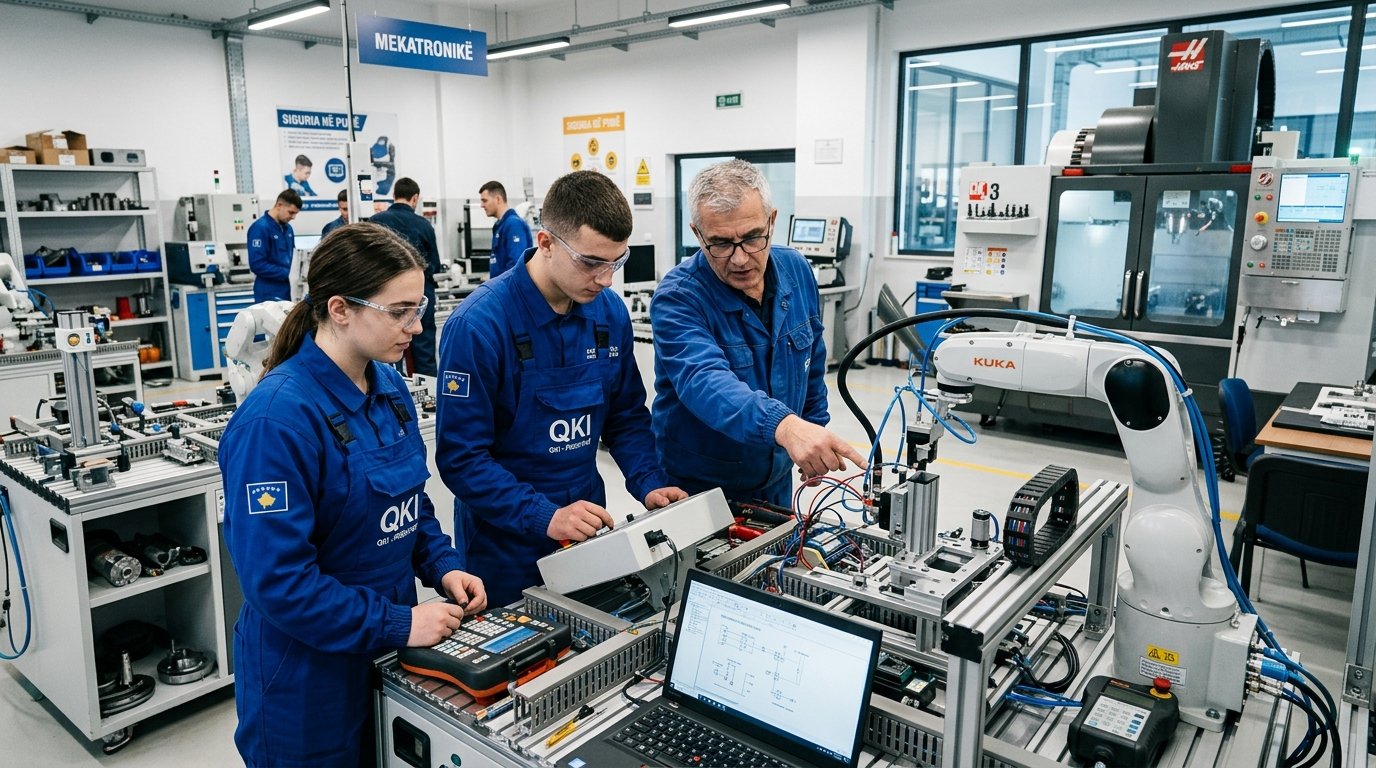
A defining virtue of the German dual education model is the active participation of private industry chambers in curriculum design. Rather than relying on outdated theoretical textbooks, vocational academies collaborate with manufacturing, mechatronics, and renewable energy companies to develop training modules reflecting state-of-the-art workplace technologies. Students learn on contemporary industrial machinery, master digital diagnostics, and obtain recognized technical certifications that guarantee immediate salaried employment upon graduation.
Overcoming Social Stigmas and Empowering the Youth Workforce
For decades, academic university tracks were viewed as the exclusive route to socioeconomic advancement, while vocational trades were undervalued. The remarkable success of dual education apprenticeships—where young technicians frequently earn higher starting salaries than general academic graduates—is fundamentally reshaping societal perceptions. Parents and high school students increasingly recognize technical craftsmanship and engineering trades as prestigious, highly lucrative career pathways that secure long-term economic prosperity.